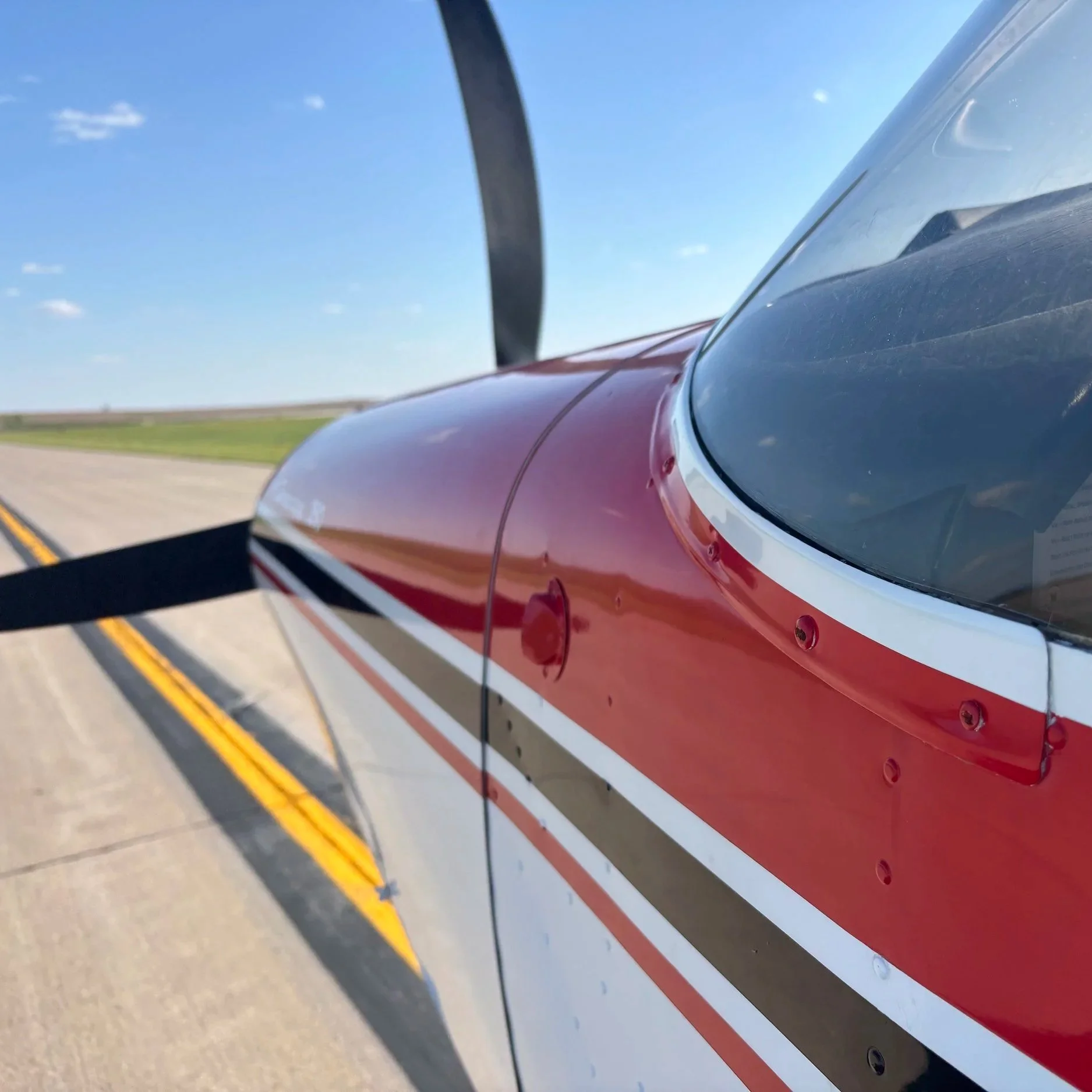
A Commercial Pilot License allows pilots to legally be compensated for flying while expanding their opportunities within the aviation industry. Training focuses on advanced aircraft control, professionalism, precision maneuvers, and real-world flight operations to prepare pilots for commercial flying environments.
With a Commercial Pilot License, pilots can pursue careers in charter flying, aerial survey, banner towing, corporate aviation, and flight instruction while continuing to build valuable experience toward future airline and professional aviation opportunities.
Commerical Pilot
-
Aeronautical Experience Requirements
Total Flight Time
Log at least 250 total flight hours, including:
100 hours in powered aircraft
50 hours in airplanes
100 hours as Pilot in Command (PIC)
50 hours of cross-country flight time
10 hours of instrument training
10 hours in a complex aircraft, turbine aircraft, or technically advanced aircraft (TAA)
Required Training
Cross-Country Requirements
One cross-country flight of at least:
300 nm total distance
Landings at 3 points
One segment at least 250 nm straight-line distance
Night Training
5 hours of night VFR training
Includes:
One night cross-country flight over 100 nm
10 takeoffs and 10 landings at an airport with an operating control tower
Practical Preparation
Receive training and endorsement from an authorized instructor
Pass the FAA Commercial Pilot Knowledge Test
Pass the FAA Commercial Pilot Checkride (oral and flight exam)
-
Our Commercial Pilot program focuses on advanced flight training and real-world skill development through structured instruction in areas such as complex aircraft operations, cross-country flying, and precision maneuvers. Training typically ranges from $20,000–$40,000+ under Part 61, depending on prior experience, aircraft type, instructor rates, and overall student progress, with total cost varying based on each individual training path.